Most water heater repair and replacement decisions come down to one number: age. If your unit is under 8 years old and the problem is a single part, repair it; most fixes run $150 to $700. If it’s over 10 years old, or the tank itself is leaking, replace it. A standard 40- or 50-gallon replacement costs about $1,200 to $2,500 installed in 2026, with tankless and heat pump systems running higher.
This guide covers how water heaters work, how long they last, the warning signs that yours is on the way out, what repairs and replacements actually cost, how to size a new unit, and how to hire a plumber who won’t overcharge you for an emergency swap.
How Does a Water Heater Work?
A water heater warms cold supply water and stores or delivers it on demand. Tank models heat 30 to 80 gallons and hold it at a set temperature until you open a tap. Tankless models heat water instantly as it flows through a heat exchanger. Both use gas burners or electric elements.
Tank Water Heaters
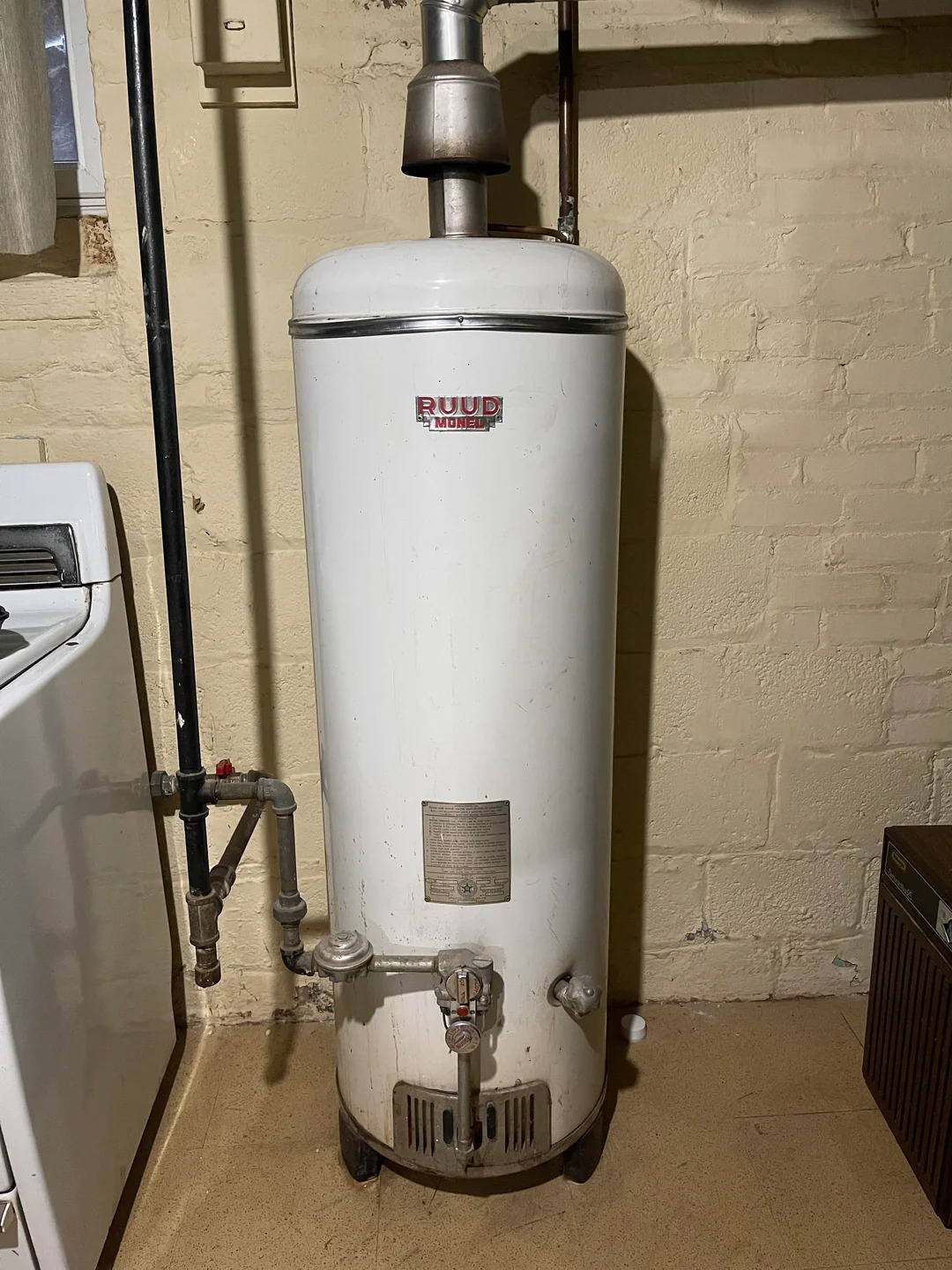
Cold water enters through a dip tube that runs to the bottom of the tank. A gas burner underneath, or one or two electric elements inside, heat that water. A thermostat holds the temperature, usually around 120°F. Hot water rises and exits from the top of the tank when you turn on a faucet.
Inside the tank, an anode rod, a metal rod that corrodes on purpose so the steel tank doesn’t, slowly sacrifices itself to rust. When it’s used up, the tank starts corroding. That’s why the anode rod matters so much later in this guide.
Tankless and Heat Pump Water Heaters
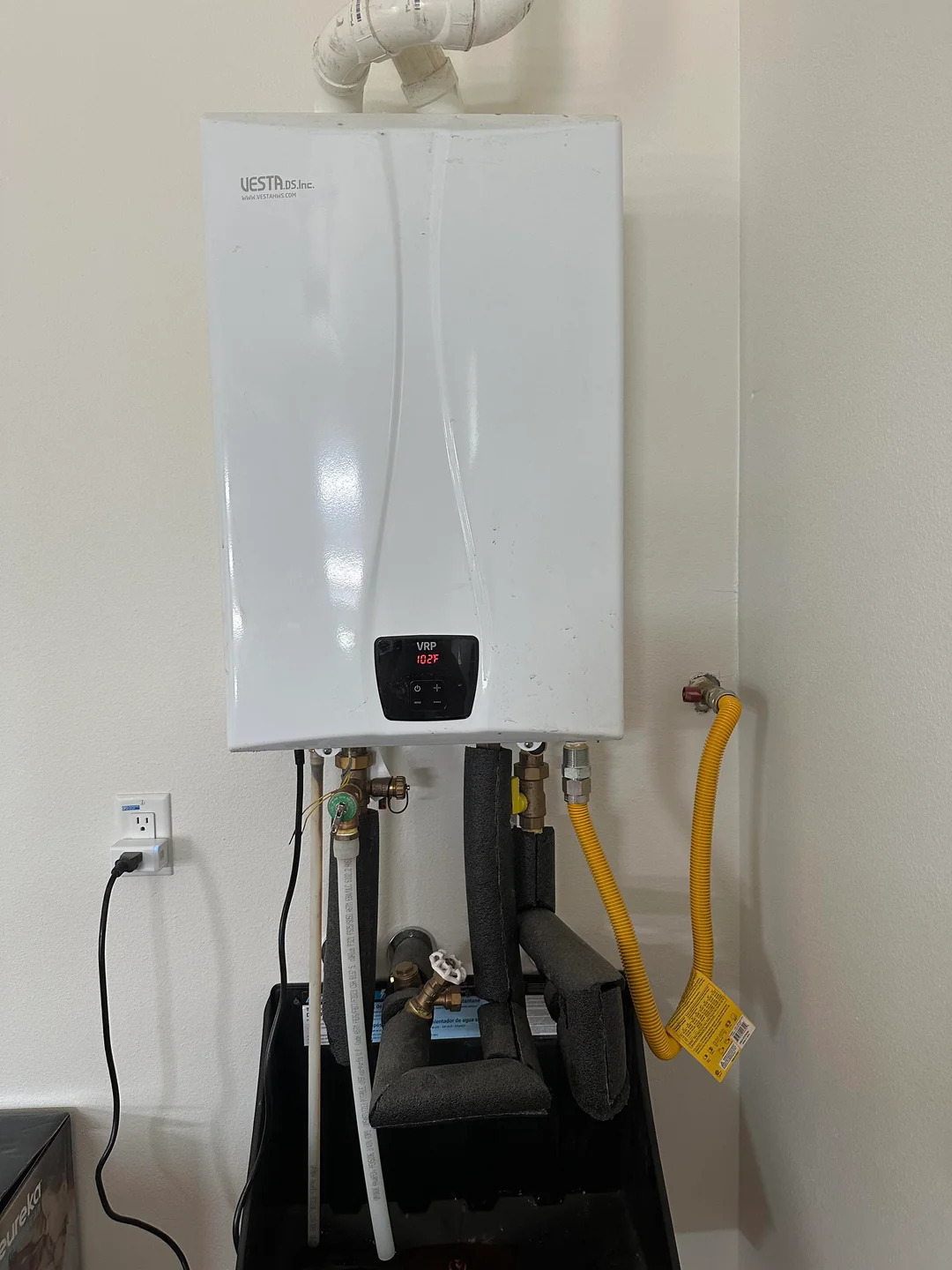
A tankless unit fires only when you open a hot tap, heating water as it passes through. No standby heat loss, no tank to rust out, but flow rate limits how many fixtures you can run at once.
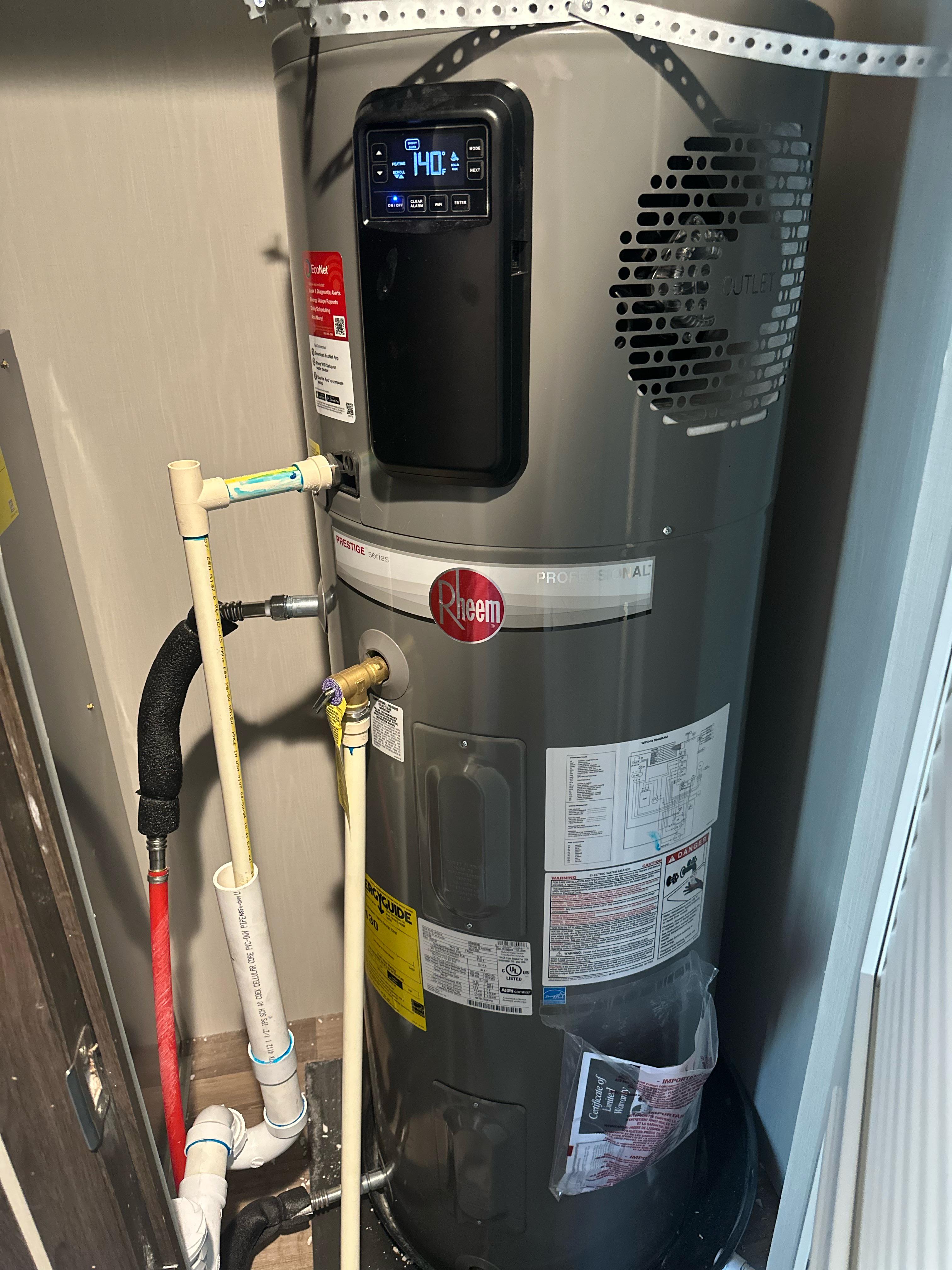
A heat pump (hybrid) water heater pulls heat out of the surrounding air and moves it into the water instead of generating heat directly. It’s roughly three times more efficient than a standard electric tank, but it needs air volume, usually 700 to 1,000 cubic feet of space, or ducting and a louvered door.
How Long Do Water Heaters Last?
Most tank water heaters last 8 to 12 years. Electric tanks tend to outlast gas tanks by a few years because they have no combustion components. Tankless systems last 15 to 20 years. Hard water shortens each of these ranges; sediment buildup is the single biggest killer of lifespan.
| Water Heater Type | Typical Lifespan | What Usually Ends It |
| Gas tank | 8–12 years | Tank corrosion, failed gas control valve |
| Electric tank | 10–15 years | Tank corrosion, repeat element failures |
| Heat pump (hybrid) | 10–15 years | Compressor or tank failure |
| Gas tankless | 15–20+ years | Heat exchanger scaling |
If you don’t know your unit’s age, check the serial number sticker on the side. Most manufacturers encode the month and year in the first four characters; a plumber can read it in seconds, and so can you with a quick search of the brand’s serial number format.
Signs Your Water Heater Is Failing
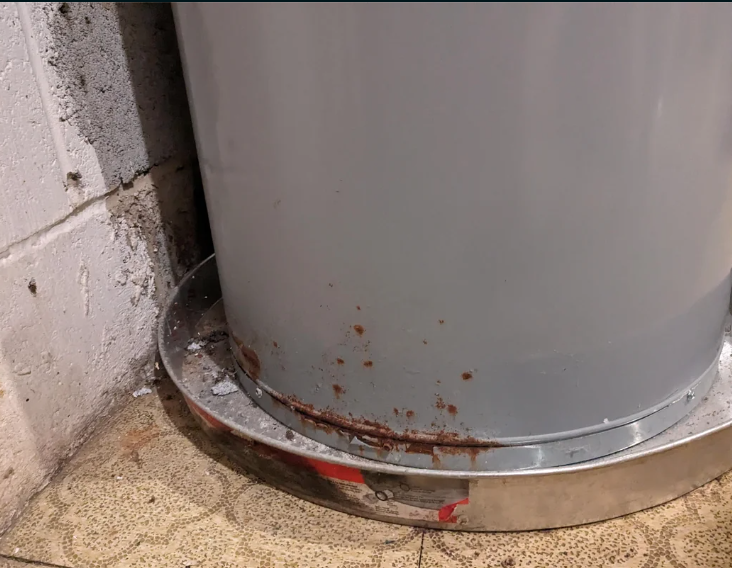
The clearest signs of a failing water heater are rusty or brown hot water, popping or rumbling from the tank, water pooling at the base, and hot water that runs out faster than it used to. Any water on the floor around the tank means you’re on borrowed time; start pricing replacements now.
- Rusty or metallic-tasting hot water. The anode rod is spent, and the tank lining is corroding.
- Rumbling, popping, or banging. Sediment has hardened on the tank bottom, and water is boiling underneath it. This also drives up your energy bill.
- Not enough hot water. A failed element, a broken dip tube, or several inches of sediment eating your tank capacity.
- Water around the base. Could be a fitting or the T&P valve. If it’s the tank seam, there's no repair.
- Water heater is 10+ years old and needs a repair. The repair may work. It also may be the first of several.
Signs You Should Call a Plumber Today
Shut off the unit and call a pro right away if you smell gas near the heater, see scorch marks or soot around the burner area, notice the T&P valve discharging repeatedly, or find standing water. Gas smell means leave the house first, then call from outside.
When Should You Replace a Water Heater?
Replace a tank water heater when it passes 10 to 12 years, when the tank itself leaks, or when a single repair quote climbs past half the cost of a new unit. Replacing on your own schedule is meaningfully cheaper than replacing at 6 a.m. on a Sunday with a wet garage floor.
Emergency same-day replacements typically cost 15% to 25% more than a planned job. You also lose the ability to compare bids, which is where most of the savings live. If your unit is over 10, get quotes now and keep them on file.
Three situations where replacement is the only real option:
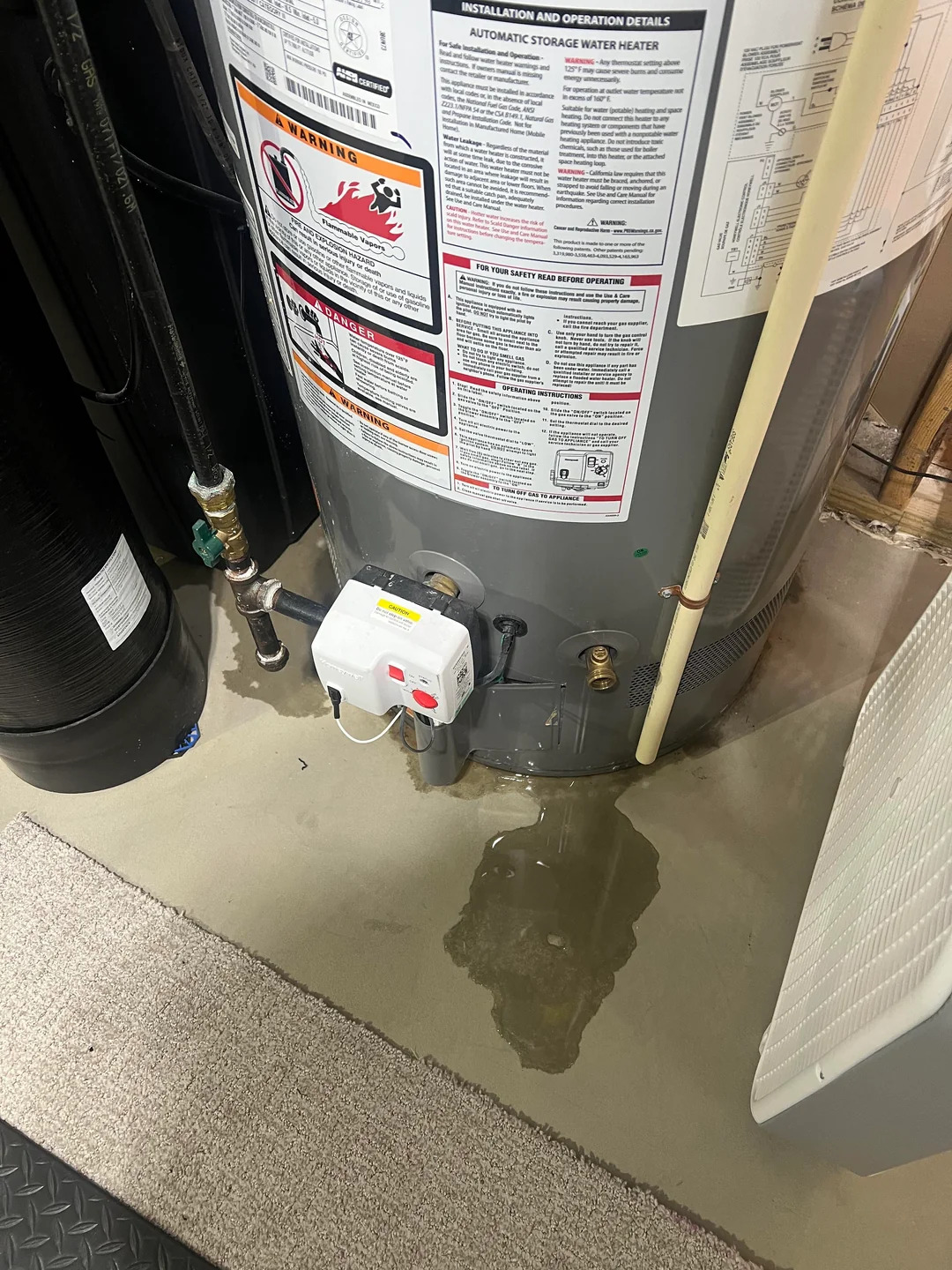
- The tank is leaking. Steel tanks aren’t repairable. Once the lining fails, it fails.
- You’ve paid for two or more repairs in the last two years. You’re funding a new unit in installments.
- The unit is undersized for your household. No repair fixes a 40-gallon tank serving five people.
Repair or Replace? How to Decide
Use the age-and-cost test: if the unit is under 8 years old and the repair costs less than 50% of replacement, repair it. If it’s over 10 years old, or the repair exceeds half the replacement price, replace it. Between 8 and 10 years, let the size of the repair decide.
| Situation | Unit Age | Recommended Move |
| Pilot light won’t stay lit | Any age | Repair, usually a thermocouple |
| Failed heating element or thermostat | Under 10 years | Repair |
| Failed heating element or thermostat | Over 10 years | Get both quotes; replacement often wins |
| Gas control valve failure | Under 8 years | Repair |
| Gas control valve failure | Over 8 years | Replace |
| Leaking tank | Any age | Replace, not repairable |
| Rusty hot water | Over 8 years | Replace |
| No hot water, unit under warranty | Any age | Repair (parts may be covered) |
What Size Water Heater Do You Need?
For a tank water heater, size by household: 30 to 40 gallons for 1 to 2 people, 40 to 50 for 3, 50 to 60 for 4, and 60 to 80 for 5 or more. Electric units should be sized one step larger than gas, because they reheat more slowly between showers.
| Household Size | Gas Tank | Electric Tank | Tankless (Flow Rate) |
| 1–2 people | 30–40 gal | 40–50 gal | 4–6 GPM |
| 3 people | 40 gal | 50 gal | 5–7 GPM |
| 4 people | 50 gal | 60–66 gal | 6–8 GPM |
| 5+ people | 60–80 gal | 80 gal | 8–10+ GPM |
Bigger isn’t automatically better. An oversized tank keeps more water hot than you use, and you pay for that every month. The number to ask about is first-hour rating (FHR): how much hot water the unit can actually deliver during a busy hour. Match FHR to your peak morning usage, not to the tank size on the label.
Sizing a Tankless Unit
Tankless units are sized in gallons per minute (GPM), not gallons. Add up the fixtures you’d realistically run at once: a shower is about 2 to 2.5 GPM, a kitchen faucet about 1.5, a washing machine about 2. Cold incoming water in northern climates reduces effective output, so size up if you’re in a cold-winter region.
Choosing the Right Water Heater: What to Ask Your Plumber
Bring five questions to every quote. The answers separate a plumber who’s sizing your house from one who’s selling you whatever’s on the truck.
- What first-hour rating are you recommending, and why that number for my household?
- Is the quote all-in? Unit, labor, permit, haul-away, and any code upgrades in writing, itemized.
- What code work will inspection require here? Expansion tank, pan, discharge piping, strapping.
- What’s the warranty on the tank versus the labor? Tanks commonly carry 6 to 12 years; labor warranties are usually 1 to 2 and vary a lot by company.
- Would a heat pump or tankless unit make sense in this space, or not? A good plumber will tell you when it doesn’t clear, venting, and panel capacity all rule options out.
Watch for a single lump-sum price with no line items. That’s the quote most likely to grow on installation day.
Water Heater Safety Basics: Pilot Lights, Pressure Valves and Explosion Risk
Water heater explosions are rare, but they happen the same way every time: the temperature and pressure relief valve fails or is blocked, pressure builds with nowhere to go, and the tank ruptures. A working T&P valve, a correct thermostat setting, and clear combustion air prevent all of it essentially.
Pilot lights. If the pilot on a gas unit won’t stay lit, the usual cause is a failed thermocouple, the sensor that tells the gas valve the flame is burning. Follow the label instructions exactly when relighting, and never hand-light a unit with electronic ignition. If you smell gas, leave the house and call from outside.
Temperature setting. 120°F is the standard. Higher settings raise scald risk (140°F water can burn a child in seconds) and accelerate mineral buildup.
Combustion air and venting. Gas units need airflow and a clear flue. Soot, scorch marks, or a rusty flue pipe mean exhaust isn’t leaving properly; that’s a carbon monoxide risk, not just an efficiency issue.
The T&P Valve Is the One Part You Never Ignore
The temperature and pressure relief valve sits on the top or side of the tank with a discharge pipe running down toward the floor. Test it once a year: lift the lever, listen for a short burst of water into the pipe, and release. If nothing comes out, or it drips continuously afterward, call a plumber. Replacement runs $50 to $300, and it’s the cheapest safety spend in your house.
Water Heater Maintenance: Flushing, Anode Rods and Expansion Tanks
Three maintenance items add years to a tank water heater: flush the tank annually, check the anode rod every 3 to 4 years, and confirm you have a working expansion tank. Together they cost a fraction of a replacement and directly target the two things that kill tanks: sediment and corrosion.
Annual flush. Sediment settles on the tank bottom, insulates the water from the burner, and forces the unit to run longer. Flushing drains it out. In hard-water areas, do it twice a year. A pro flush runs $100 to $250; many plumbers include it in a maintenance visit.
Anode rod check. Every 3 to 4 years, have the rod inspected. When it’s corroded down to the core wire, replace it for $150 to $300. Skipping this is the most common reason tanks die at 8 years instead of 14.
Expansion tank. Modern closed plumbing systems have nowhere to send the pressure created when water heats and expands. An expansion tank absorbs it and takes strain off the tank seams and T&P valve. Many jurisdictions now require one on replacement, and it’s a $300 to $500 add-on if you don’t have it.
Set a yearly reminder: flush the tank, test the T&P valve, check for moisture at the base, and confirm the temperature is at 120°F. That’s a 30-minute routine that regularly buys three to five extra years.
How to Find a Licensed Plumber for Installation or Repair
Verify three things before hiring: an active state or municipal plumbing license, liability insurance, and a written itemized quote. Then get at least three bids. Water heater quotes vary widely between companies for identical work, and the spread is almost entirely labor and markup, not equipment.
- Confirm the license number with your state board; most have a free online lookup.
- Ask who pulls the permit. The plumber should, always. If they suggest skipping it, that’s your answer.
- Get the quote itemized into unit, labor, permit, disposal, and code upgrades.
- Check whether the price is guaranteed or an estimate that can change on install day.
- Read recent reviews about the install, not the sales visit. Callbacks and no-shows show up in reviews from 6 to 12 months out.
Comparing quotes from vetted, licensed plumbers near you is the single highest-return step in this whole process; 20 minutes of comparison routinely saves several hundred dollars on the same job.
Water Heater FAQs
How long does a water heater installation take?
A straight tank-for-tank swap usually takes 2 to 3 hours. Converting to tankless takes 4 to 8 hours, and sometimes two visits, because of venting, gas line sizing, and electrical work.
Can I install a water heater myself?
In many jurisdictions, no gas and electrical connections require a licensed plumber, and unpermitted work can void both the manufacturer warranty and your homeowners insurance coverage if the unit causes damage.
Why does my water heater keep running out of hot water?
Usually a failed lower heating element on an electric unit, a broken dip tube, or sediment eating your usable tank capacity. If the unit is over 10 years old, sizing may simply have outgrown your household.
Is a tankless water heater worth it?
It costs $800 to $3,800 more upfront but lasts roughly twice as long and cuts standby energy loss. If you’re staying in the house 10-plus years, the math usually works. If you’re selling in three, it usually doesn’t.
What temperature should my water heater be set to?
120°F. It’s hot enough to prevent bacterial growth in the tank, low enough to reduce scald risk, and it slows mineral buildup compared with higher settings.