Our advice on how to unclog a toilet is to stop the rising water first, use a flange plunger for a soft blockage, then try a toilet auger gently if needed. At Wise Workman, we help you compare plumbers when a clog keeps returning, an object is trapped, or other drains back up.
Before you start: We recommend stopping and calling a plumber if several drains back up, a hard object is lodged, or chemical drain cleaner remains in the bowl.
Stop an Overflow Before Trying Any Fix
We recommend controlling the water before touching the blockage. An overflowing toilet needs immediate attention, and another flush adds water to a blocked toilet drain.
Stop Flushing and Close the Flapper if Water Is Rising
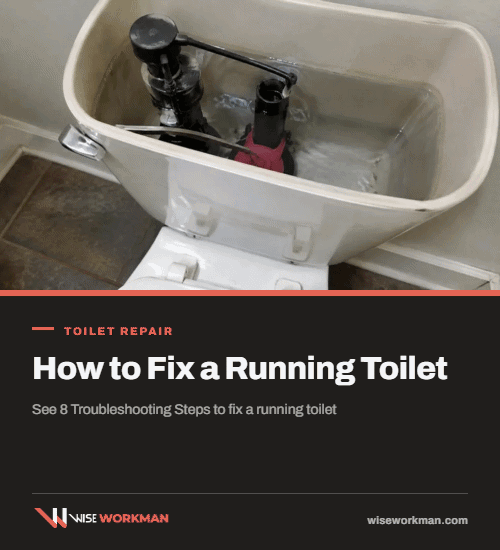
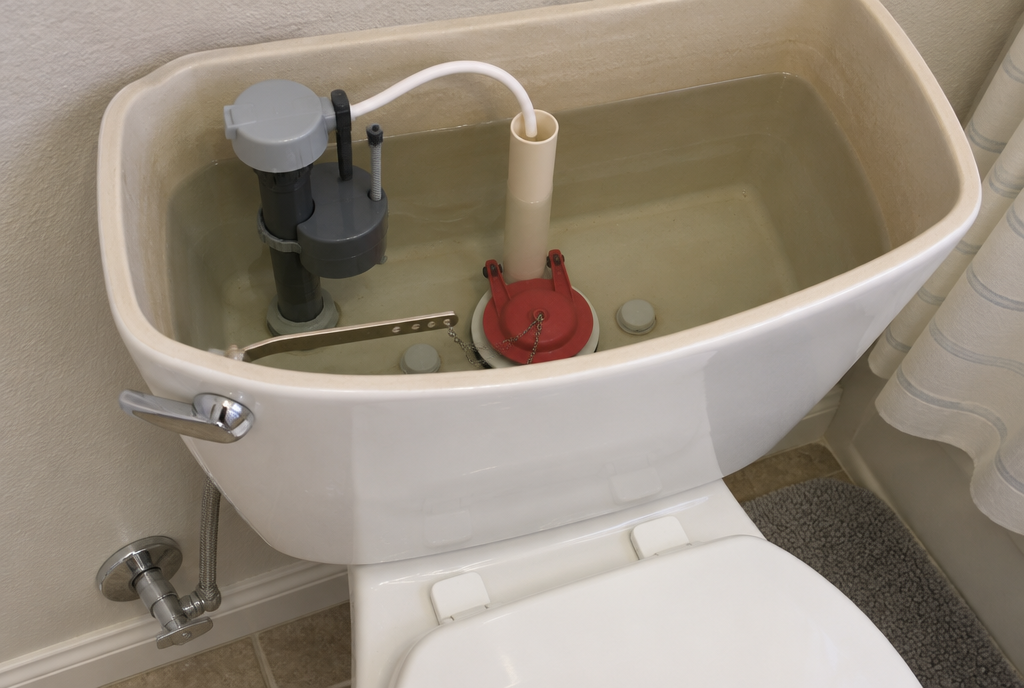
Release the flush handle and carefully lift the tank lid onto a stable surface. On a conventional tank toilet, press the rubber flapper over the opening at the tank’s bottom to stop water entering the bowl. Keep your hands away from unfamiliar pressure-assisted tank equipment; follow its manufacturer’s instructions.
A plumber in r/Plumbing says to stop flushing once a toilet is clogged, because another flush never clears it, and adds that renters can be charged for the damage.
Shut Off the Supply and Make Room in the Bowl
Turn the supply valve behind the toilet clockwise until it closes, without forcing a stuck valve. This stops refilling, though water already in the tank still needs controlling.
If the bowl is nearly full, use a dedicated cup to transfer excess water into a sturdy bucket. Keep the bucket away from children and pets, and leave enough bowl space for tool movement.
Gather Tools and Check Whether DIY Is Safe
We suggest gathering:
- Waterproof gloves and splash protection.
- Old towels and a bucket.
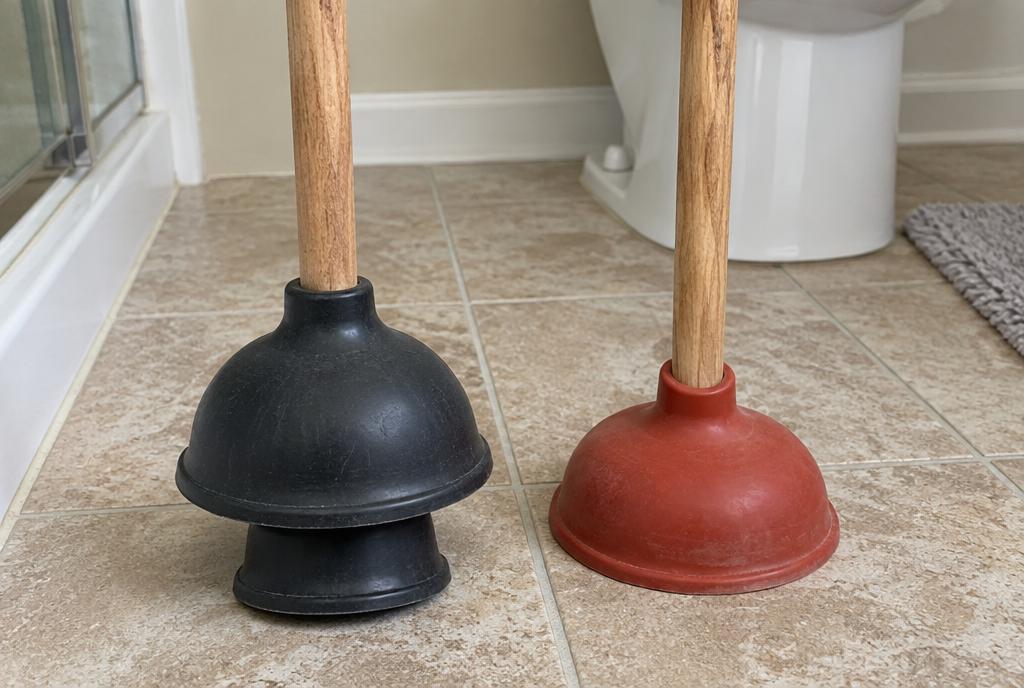
- A flange-style toilet plunger.
- A hand-operated toilet auger with a protective sleeve.
DIY is suitable for a suspected paper-and-waste blockage confined to one toilet. Stop if the bowl is cracked, the fixture moves, or sewage rises elsewhere.
Clear the Blockage With a Plunger or Toilet Auger
A flange plunger is our first choice for an ordinary toilet clog because its extended rubber flap seals the curved outlet. A protected closet auger gives you a controlled next step when plunging produces no improvement.
Create a Seal With a Flange Plunger
Extend the flange and lower the toilet plunger at an angle so water fills its cup. Fit the flange into the outlet and press the cup against the bowl.
Keep enough water to cover the cup while preserving splash room. We recommend forming a tight plunger seal before applying pressure.
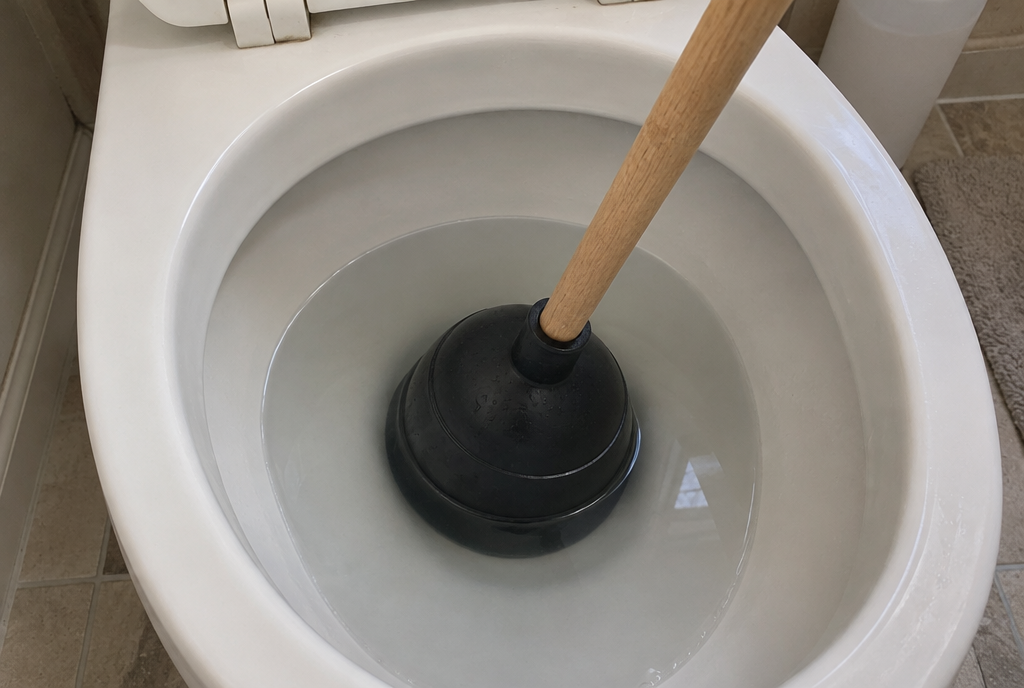
A plumber in r/Plumbing says to make sure the plunger has a flange so it seals the outlet, rather than a cheap red cup plunger.
Use Controlled Strokes and Check for Drainage
Start with a gentle push to release trapped air. Continue steady push-and-pull strokes while keeping the seal intact, then lift the plunger and watch the water.
Repeat only while progress is visible and splashing remains controlled. Water dropping toward its usual level indicates improved drainage; water staying high means the blockage remains.
Terry Love of Love Plumbing & Remodel, who runs the Terry Love forum, says people usually plunge with big up-and-down strokes, which leave some blockages in place. With water covering the cup, he works short, quick strokes and finishes with a strong upward pull until the water drains.
Try a Closet Auger When Plunging Fails
We recommend a hand-operated toilet auger, also called a closet auger or toilet snake. Its protective sleeve shields porcelain from the cable; an exposed general-purpose drain snake risks scratches.
A plumber in r/askaplumber recommends a closet auger, which is a snake made specifically for toilets.
- Seat the protective sleeve. Retract the cable as the tool’s instructions require, then place the curved sleeve at the toilet outlet. The protective surface should separate metal from porcelain.
- Advance the cable gently. Turn the handle as directed while feeding the cable slowly. Stop at firm resistance or binding; successful movement stays controlled without forcing.
- Retract the cable. Follow the tool’s instructions and withdraw it slowly. Place any retrieved debris in the trash, leaving the cable clear of the bowl.
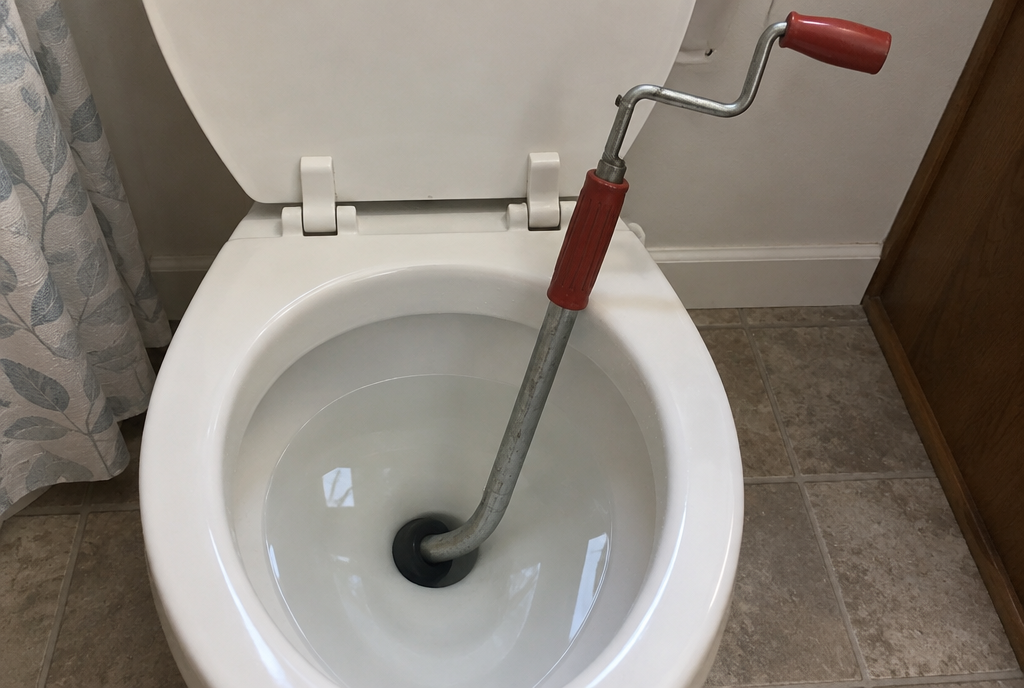
If the auger jams in the trap and won’t come back out, a Master Plumber on the Terry Love forum suggests cranking the handle in reverse while pulling back on it. If it still won’t free up, a plumber with a better auger may be able to clear it.
Test One Flush Only After Water Drains Normally
After the bowl drains, slowly add a small amount of water while watching its level. Stop adding water if it rises and stays high.
Once added water drains freely, restore the supply and allow the tank to refill. Try one flush with access to the flapper and shutoff; stop immediately if the bowl rises again.
What Can You Try Without a Plunger?
We recommend treating household remedies as limited options for soft obstructions. Getting a proper plunger is the more dependable next step when you need to unclog a toilet without a plunger on hand.
Try Dish Soap and Hot Tap Water for a Soft Clog
Using dish soap and hot water can help loosen a minor paper obstruction in a clogged toilet. Dish soap lubricates the porcelain passage, allowing stuck waste to slide through.
Only attempt this when the bowl has capacity and contains no cleaning chemicals. Add liquid dish soap first, then slowly pour in hot water from waist height. Never use boiling water because sudden heat risks cracking porcelain; stop pouring if the level rises.
Understand the Limits of Baking Soda, Vinegar, and Enzymes
We do not recommend baking soda and vinegar for a blocked toilet. While many DIY tips suggest baking soda and vinegar, their fizz does not reliably dissolve packed paper, hair, or lodged objects.
The bubbling action produces minimal downward pressure in an open bowl, and pouring extra liquids simply increases overflow risk when facing a stubborn clogged toilet.
An enzyme drain cleaner is a maintenance option for organic buildup. Use only a product labeled compatible with your toilet and, where relevant, septic system; follow its directions.
Avoid Wire Hangers, Forceful Brush Tricks, and Risky Vacuum Setups
We recommend keeping improvised tools out of the toilet drain. Common mistakes include:
- Pushing a wire hanger into porcelain passages.
- Pumping a toilet brush forcefully and splashing contaminated water.
- Using a household vacuum or an improvised wet/dry vacuum setup.
A toilet drain snake needs a protective sleeve and suitable design. Leave contaminated-water extraction to someone with appropriate equipment and cleanup procedures.
Never Mix Cleaners or Work Through Chemical Drain Cleaner
We advise against chemical drain cleaners for this job. If one has already been added, stop plunging and snaking because trapped liquid poses a splash hazard.
Keep people away from the bowl and follow the product’s safety instructions. Tell the plumber the product name and what else entered the toilet; never add bleach, vinegar, or another cleaner.
When Should You Call a Plumber?
Knowing when to call a plumber keeps a simple clogged toilet from escalating into extensive water damage. We recommend professional help when careful mechanical clearing fails or symptoms extend beyond one fixture.
Several backed-up fixtures require prompt attention and an immediate pause in household water use.
Stop for Recurring Clogs, Trapped Objects, or Multiple Backed-Up Drains
Stop DIY work for repeated clogs, suspected non-flushable items, firm auger resistance, or sewage entering another fixture. For deeper backups, stop using sinks and appliances that discharge water.
On HeatingHelp’s forum, Dave Yates recalls a toilet from his service-tech days that cleared with a closet auger and handled his test flush of a heavy load of paper, then clogged again. On the return visit he used an inspection mirror and flashlight to look up into the trap, where he says pencils, combs and toothbrushes commonly get hung up. The cause turned out to be a jar lid trapping a golf ball, found only after he lifted the toilet off its flange.
| Symptom | Likely cause | Next action |
| One toilet clogs after heavy paper use | Local soft blockage | Controlled plunging |
| Abrupt blockage after an object falls in | Trapped object | Professional retrieval |
| Toilet repeatedly clears, then clogs | Partial obstruction or flushing fault | Diagnostic visit |
| Several fixtures back up | Shared drain or sewer problem | Prompt plumbing service |
We recommend leaving inaccessible obstructions and main-sewer work to a professional.
Distinguish a Local Clog From Persistent Odors or Drainage Faults
An isolated clog affects one fixture; persistent odors need a separate diagnosis. Biofilm beneath the rim or around dirty surfaces is one possible odor cause.
A dry trap in an unused nearby drain lets sewer odors enter, while gurgling raises venting concerns. We recommend drain repair assessment when odors continue after cleaning or drainage stays poor; avoid roof-vent access.
Compare Toilet Repair Plumbers With Wise Workman
Wise Workman scores local plumbers on real homeowner reviews, and nobody can pay for a higher rank.
Our coverage draws on Angi, Google, Yelp, Thumbtack, and HomeAdvisor. Our WW Score methodology evaluates Project Completion (35%), Professionalism (30%), Experience (20%), and Price Friendly (15%).
Evidence volume and coverage influence rankings, so sparse praise receives less confidence. Our data-governance practices explain review handling and factual corrections; rankings provide comparison support without guaranteeing results.
Check Licensing, Insurance, and Written Pricing Before Booking
We recommend verifying licensing with the relevant authority and requesting current insurance information. Public profile details need checking before you book.
Ask for written pricing that explains diagnostic charges, the clearing method, and approval requirements for extra work. Confirm whether toilet repair costs include removing and resetting the fixture if retrieval requires access underneath.
How Can You Prevent Another Clogged Toilet?
Taking daily steps to prevent a clogged toilet saves time and protects your home's drainage lines. We recommend limiting what enters the bowl and addressing weak flushing early.
Repeated plunging deserves a diagnosis even when each blockage eventually clears.
Flush Only Toilet Paper and Human Waste
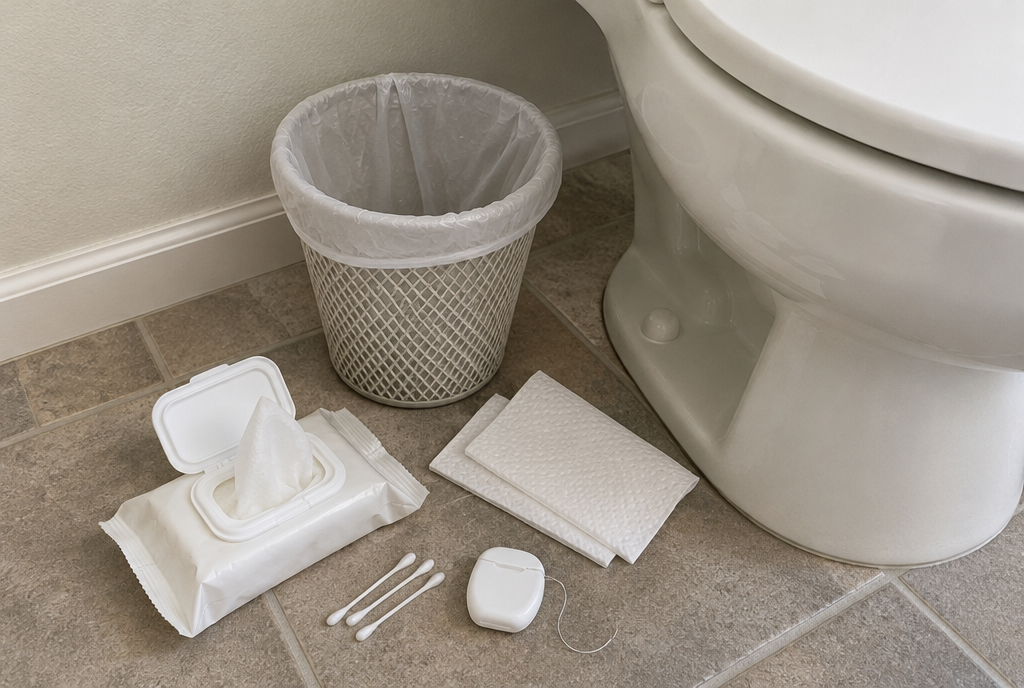
Keep wipes, tissues, paper towels, cotton products, and dental floss out of the toilet. We recommend putting wipes in the trash even when their packaging says “flushable.”
Food scraps and grease also belong outside the plumbing system. Keep a nearby wastebasket available so disposal stays convenient.
Use Less Paper and Keep Non-Flushable Items Out
Use manageable amounts of toilet paper and avoid compressing it into dense bundles. If separate flushes are needed during normal use, confirm complete drainage before adding more paper.
Keep the lid closed when the toilet is unused. We also suggest moving small objects away from shelves directly above the bowl.
Follow a Simple Cleaning and Performance-Check Schedule
We suggest adding these tasks to your home maintenance checklist:
- During routine bathroom cleaning, clean beneath the rim with a compatible product.
- During normal use, watch for slower emptying or an unusual bowl level.
- Periodically inspect visible connections for moisture without forcing valves.
- Address running water or weak flushing when it starts.
A worn flapper or fill-valve fault calls for running-toilet repair. Use the manufacturer’s tank-water setting to preserve the intended flush.
Restore Normal Drainage Without Forcing the Blockage
Our recommended approach is to control overflow, establish a plunger seal, and use a protected toilet auger only with gentle pressure. Resume flushing after added water drains freely.
Stop when resistance stays firm or symptoms return. Tell the plumber which methods you tried, whether an object entered the bowl, and whether any cleaner remains.
Frequently Asked Questions
What is the fastest way to unclog a toilet?
We recommend a flange plunger for a suspected soft clog confined to one toilet. Control rising water first, then use a tight seal and steady strokes.
Should I flush the toilet again if it is clogged?
We advise keeping the handle untouched while water remains high or drains slowly. Test one flush only after drainage returns.
Will letting a clogged toilet sit unclog it?
Waiting sometimes softens a paper-and-waste blockage. We recommend keeping the toilet out of use while waiting; a trapped object or shared-drain backup needs intervention.
What should I do with a clogged toilet containing poop?
We recommend the same controlled plunging method, with gloves and splash protection. Keep children and pets away, then clean and disinfect contaminated surfaces after drainage returns.
How can I clear a deep clog in my toilet?
We recommend a protected toilet auger for an obstruction within its intended reach. If the cable binds, reaches its limit, or other fixtures back up, arrange professional clearing.