To clean a shower drain, we recommend removing hair, gently snaking out trapped debris, scrubbing accessible surfaces, and rinsing with hot tap water. Mastering how to clean a shower drain keeps water moving freely and stops foul smells.
If drainage stays slow or sewer odors persist, hire help. At Wise Workman, we help you compare local plumbers when basic cleaning leaves the problem unresolved.
Before you start: Stop and contact a plumber if multiple drains back up, you see a leak, or sewer odors persist. If chemical cleaner is already in the drain, leave it undisturbed and tell the plumber which product you used.
What Is Blocking the Drain, and What Will You Need?
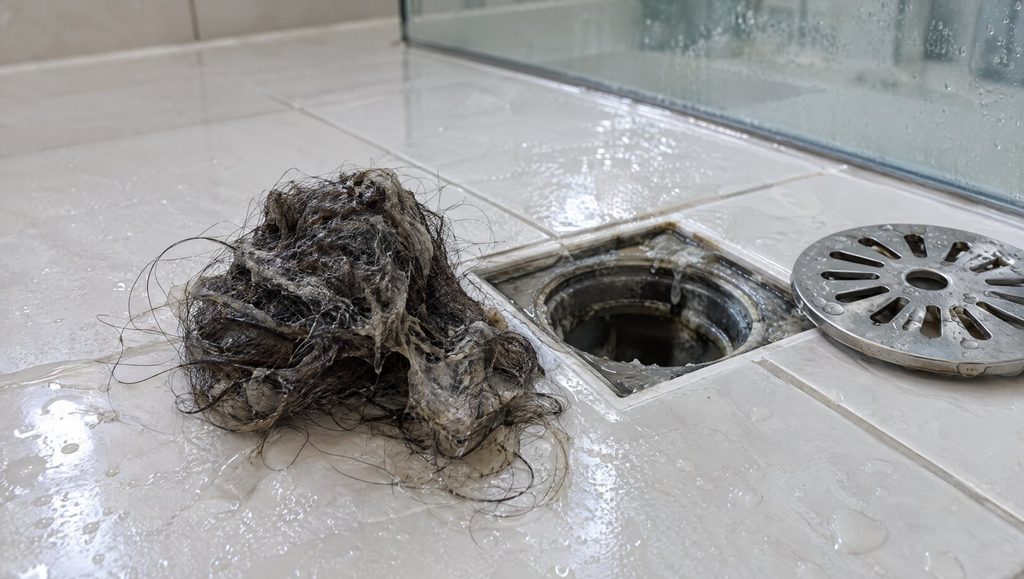
Hair mixed with sticky soap scum is a common shower drain clog that you can reach from the opening. Knowing how to unclog a shower drain starts with identifying blockage symptoms before removing your shower drain cover.
Evaluating a clogged shower drain early prevents damage to delicate finishes and plumbing pipes.
Match the Symptoms to the Likely Cause and Fix
The location and pattern of the problem help narrow down the cause. Use these clues to choose a safe first action.
| Symptom | Likely cause | First action |
| Visible hair and slow flow | Hair clogs near the opening | Pull out accessible hair |
| Sticky coating around the cover | Soap scum and product residue | Scrub accessible surfaces |
| Hard, chalky crust | Mineral buildup | Use a finish-compatible cleaning method |
| Slow flow after hair removal | Deeper blockage | Arrange professional assessment |
| Several fixtures back up | Shared drain or sewer blockage | Stop water use and hire help |
| Odor from an unused shower | Dry drain trap | Run water, then reassess |
Our drain repair guidance distinguishes cleaning problems from faults that need repair. Avoid treating every slow drain as a surface hair clog.
Gather Tools and Identify the Drain Cover Type
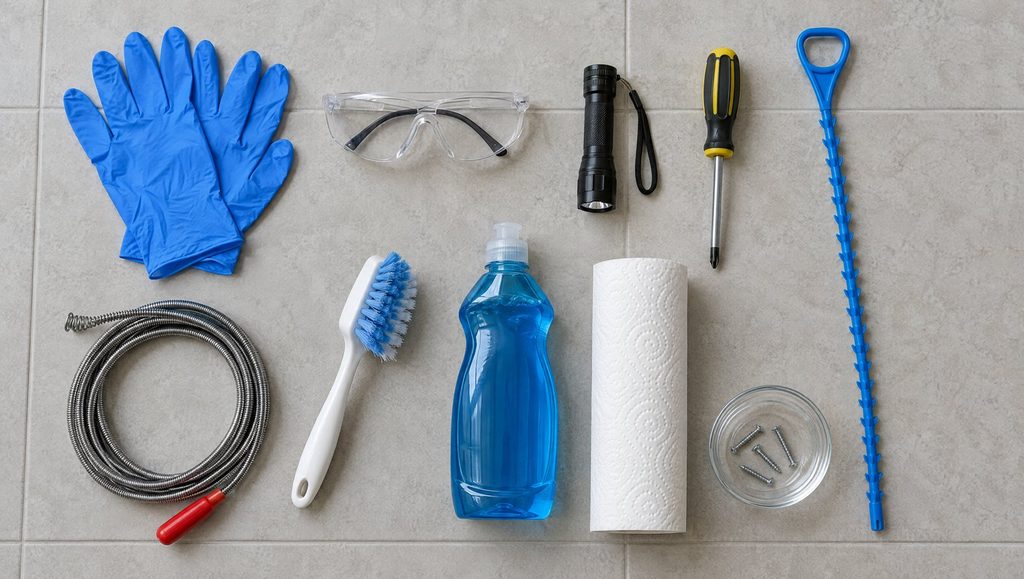
We suggest gathering these supplies before opening the drain:
- Rubber gloves and eye protection
- Flashlight
- Correctly sized screwdriver
- Plastic barbed hair-removal tool or a flexible drain snake
- Soft brush and mild dish soap
- Paper towels, trash bag, and container for screws
A manual drain snake works well when reaching deeper hair accumulations. Screw-fastened covers have visible screws, while snap-in styles rely on clips or friction. Linear drains have long covers that lift with a dedicated key or release through model-specific fasteners.
Before buying a replacement shower drain cover or drain strainer, record the brand and model. Measure the opening, cover dimensions, and screw spacing, then match those details to the manufacturer’s specifications.
Clear Hair and Grime in 6 Steps
Understanding how to clean a shower drain involves working from the opening downward to remove accumulated debris. These steps explain how to unclog a shower drain safely when no harsh chemicals or sewer backup signs are present.
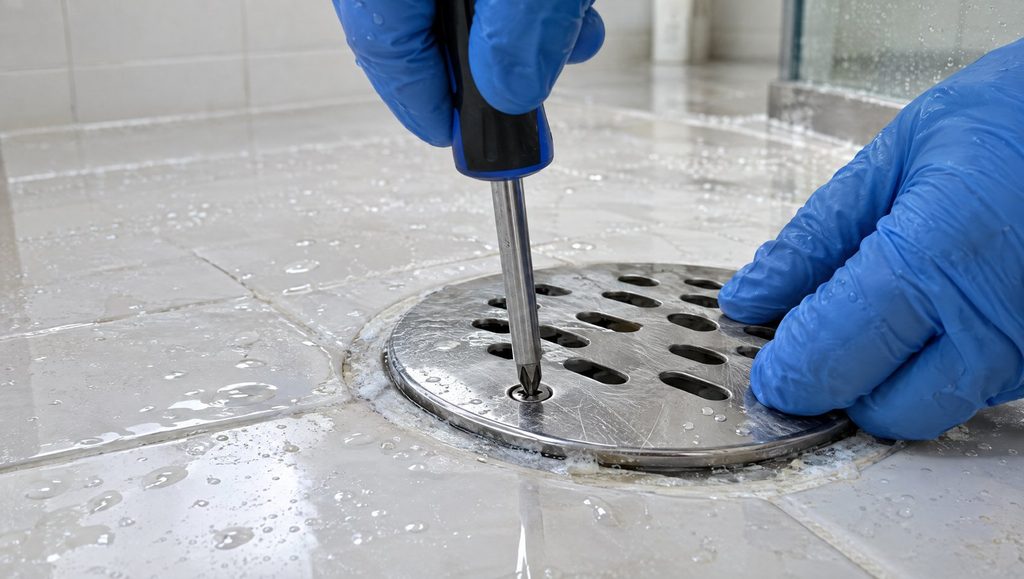
Step 1: Remove the Drain Cover
Remove visible cover screws with the matching screwdriver and place them in a container. For a confirmed snap-in cover, lift at its intended release point; for a linear cover, follow its manufacturer’s removal instructions. The successful result is an exposed opening with the surrounding drain body still firmly in place.
A screwless cover lifts straight up rather than turning. If the whole fitting turns with it, stop twisting; the drain body can leak into the ceiling below.
Step 2: Pull Out Visible Hair and Debris
Pull reachable hair from the underside of the cover and the drain opening with gloved fingers or a suitable gripping tool. Put the debris in the trash and avoid pushing it farther down. The opening should be free of visible hair mats.
Step 3: Retrieve Trapped Hair With a Drain Snake
Feed a plastic hair-removal tool or small drain snake gently into the opening, following its operating instructions. Carefully twisting the drain snake helps snag stubborn tangles from the pipe walls.
Withdraw it slowly to collect trapped hair, clearing the tool into the trash between passes. Stop at firm resistance; a successful pass clears a clogged shower drain without moving the drain fitting.
If a plastic hair tool can't reach it, use a hand auger. Turning it at the bottom of the drain threads it into the hair and pulls the clump up.
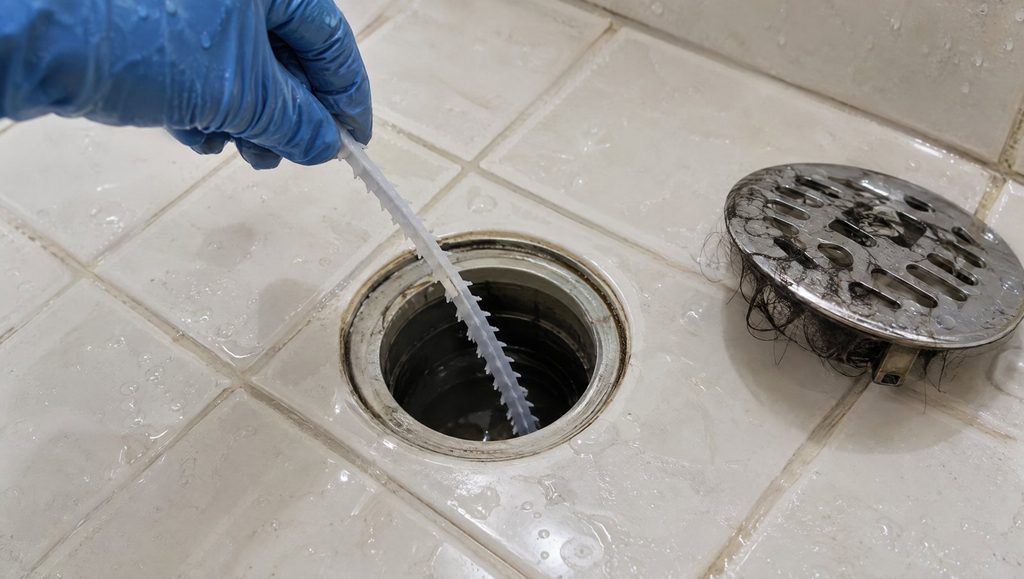
Step 4: Scrub the Cover and Accessible Drain Opening
Scrub the removed shower drain cover and reachable drain surfaces with mild dish soap and a soft brush. Eliminating accumulated soap scum removes food sources for bacteria that generate foul shower drain odors.
Keep the brush within easy reach and use a cleaner approved for the cover’s finish. The cleaned surfaces should be free of loose slime and soap scum buildup.
Step 5: Rinse With Hot Tap Water
Rinse the shower drain cover and opening with hot tap water, keeping your hands clear of scalding water. We recommend avoiding boiling water because intense heat risks damage to some plastic piping, seals, and shower finishes.
Pouring boiling water into ABS or PVC pipes can weaken joints and soften rubber gaskets. Stop if water rises; successful rinsing carries away loosened residue without pooling.
Step 6: Refit the Cover and Test Drainage
Refit the cover using its original fasteners or clips, tightening screws gently. Run the shower at its normal flow while watching the drain and surrounding floor. The cover should sit securely, and water should drain without a growing puddle.
What If the Cover Sticks or the Problem Returns?
A stuck cover needs careful release, while returning symptoms need a closer look at the cause. We recommend stopping before added force or repeated cleaner use damages the drain.
Free a Stuck Cover Without Damaging the Drain
Clean soap deposits from screw heads so the screwdriver seats fully. Check for hidden fasteners before trying to lift the cover, and use only a finish-compatible product for crusted deposits.
Avoid levering against tile, stone, or the shower base. If a screw strips, the cover remains inaccessible, or the entire fitting moves, leave removal to a plumber.
Investigate Persistent Slow Drainage and Recurring Odors
A smelly shower drain can have several causes. Slime on accessible surfaces is biofilm, a layer of microbes and residue that needs physical cleaning.
In an unused shower, water evaporating from the curved drain trap allows sewer gas through. This noxious sewer gas can escape into your bathroom whenever the water barrier dries out.
Run water to refill the trap and reassess the shower drain odor; persistent smells need professional attention.
Returning slow drainage suggests material remains farther down the pipe. Gurgling or changing trap water levels also warrants an assessment for drainage or venting faults.
Avoid Cleaner Combinations and Other Costly Mistakes
We favor physical removal for reachable hair clogs. Baking soda and vinegar do not reliably dissolve a packed hair blockage, and fizzing alone does not show that a clogged shower drain is clear.
Avoid these mistakes:
- Mixing any drain cleaner with another cleaning product
- Combining bleach with vinegar, acids, or ammonia
- Plunging or snaking a drain containing chemical drain cleaner
- Repeatedly dosing a blocked drain with commercial drain cleaner
- Forcing tools past resistance
- Loosening the sealed drain body during routine cleaning
For a drain that contains no chemicals, proper plunger use is another option for some soft blockages. Stop if water splashes back or drainage fails to improve.
Skip the chemicals. For a stubborn blockage, use a snake sized for your drain and auger it properly, so the hair comes out instead of sitting under a chemical.
How Can You Prevent Hair and Soap Buildup?
Catching hair before it enters the pipe gives you a practical way to prevent shower drain clogs. We recommend pairing a removable catcher with regular surface cleaning.
Brush long hair before you get in the shower. It takes the loose strands out first, so far less hair reaches the drain at all.
Fit a Hair Catcher and Empty It Regularly
Choose a hair catcher that fits your cover style and leaves enough space for water flow. Confirm compatibility with lift-out baskets or linear drain channels before buying.
Empty it after each shower and put the hair in the trash. If water pools around a clean catcher, check whether its shape restricts the opening.
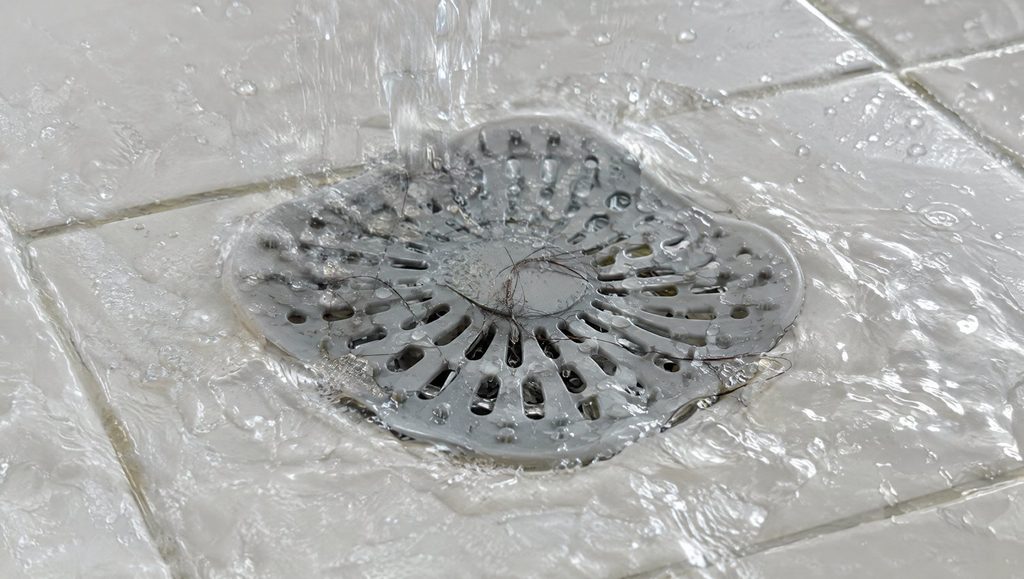
Set a Cleaning Schedule That Matches Shower Use
We suggest this starting schedule, with more frequent checks when hair collects quickly:
- After each shower: Empty the catcher.
- During weekly bathroom cleaning: Inspect the opening and wipe away residue.
- Monthly: Check beneath an easily removable cover and clean visible buildup.
- Whenever flow slows: Inspect promptly before a full blockage develops.
Add the drain to your home maintenance checklist so the inspection becomes part of regular bathroom care.
Understand Where Enzyme Cleaners Can Help
An enzyme-based drain cleaner is a maintenance option for certain organic residues. Choose a product labeled for your plumbing and follow its directions, including any septic-system restrictions.
These products work gradually and are unsuitable for an urgent backup. We recommend removing hair physically and investigating repeated clogs even if you use an enzyme product.
When Should You Call a Plumber?
Recognizing when to call a plumber prevents minor plumbing annoyances from turning into catastrophic home floods. Professional help is appropriate when standard cleaning leaves a clogged shower drain intact or symptoms extend past the shower trap.
We recommend stopping DIY work when damage, wastewater, or persistent sewer odors are involved. A certified professional plumber possesses motorized augers and inspection cameras to diagnose deep line failures.
Stop for Backups, Leaks, or Persistent Sewer Odors
Contact a professional plumber if you notice:
- Wastewater backing into the shower
- Several fixtures draining slowly together
- Leaks around or below the shower
- Sewer odors that remain after cleaning and refilling the trap
- Repeated clogs after accessible hair removal
- A loose fitting or inaccessible cover
Stop using affected fixtures during a wastewater backup. If a strong odor causes dizziness or irritation, leave the area and seek urgent help; avoid investigating the piping yourself.
Compare Local Drain-Cleaning Professionals With Wise Workman
We help you compare contractors when cleaning is insufficient. Wise Workman scores local plumbers on real homeowner reviews, and nobody can pay for a higher rank.
Our WW Score evaluates Project Completion (35%), Professionalism (30%), Experience (20%), and Price Friendly (15%). Our coverage draws from Angi, Google, Yelp, Thumbtack, and HomeAdvisor, with more than 1.2 million plumber reviews analyzed.
Supporting evidence affects rankings: dimensions with few mentions receive less influence, and recent reviews carry more weight. The score helps you compare homeowner experiences; check licensing and insurance directly before hiring.
Ask for written pricing that explains the proposed work and any extra charges. Keep approval for additional work clear before service begins.
Keep Water Flowing With Hair Removal and Routine Care
We recommend starting shower drain cleaning with accessible hair removal, followed by gentle snaking and surface scrubbing. Use hot tap water for the rinse and check drainage after refitting the cover.
To prevent shower drain clogs, empty the catcher after use and inspect beneath removable covers regularly. If slow flow returns or sewer odors remain, arrange a professional assessment.
Frequently Asked Questions
Can I clean a shower drain myself?
We recommend DIY cleaning for reachable hair and residue when the cover is accessible, and the drain contains no chemical cleaner. Stop for leaks, wastewater backups, or firm tool resistance.
How do I clean a shower drain without removing the cover?
We suggest lifting visible hair from the grate and using a flexible plastic hair tool through an opening only if it fits freely. Scrub the surface, but leave an inaccessible blockage to a plumber.
Can baking soda and vinegar clear hair from a shower drain?
We do not recommend baking soda and vinegar for hair clogs because the mixture does not reliably dissolve packed hair. A retrieval tool removes the material causing the blockage.
How can I clean a shower drain without a plunger?
We recommend the hair-removal and gentle-snaking method described above for accessible clogs. Scrubbing and rinsing finish the cleaning once the trapped debris is removed.
Does Dawn dish soap unclog a shower drain?
We recommend Dawn dish soap for cleaning accessible greasy residue, but it does not reliably clear a blocked shower drain. Use a small amount for scrubbing, rinse it away, and physically remove trapped hair.
How to unclog a shower drain that drains slowly?
To unclog a shower drain with sluggish flow, start by removing the shower drain cover. Pull out accessible hair clumps with gloved fingers or use a drain snake to snag debris further down.