It never starts as an emergency. The kitchen sink drains a second slower than it used to; you decide not to think about it, and a week later you are standing ankle-deep in gray water halfway through a shower.
Most drain repair turns out to be small: one slow sink or tub is usually a clog you can clear in under an hour with tools you already own. The expensive jobs are the buried ones, and they announce themselves differently. This guide covers what causes drain trouble, what you can safely handle yourself, and the signs that mean you should stop and call someone.
Key Takeaways
- One slow drain is almost always a small clog you can clear yourself.
- Two or more drains backing up at once points to the main line, which needs a professional.
- Skip liquid drain cleaners, because they can eat older pipes and burn your skin while often leaving the real blockage in place.
- Call right away if you see sewage coming up, water at a floor drain, or smell sewer gas inside the house.
- Get two or three quotes before agreeing to any dig or pipe replacement.
What Causes Drain Problems in the First Place?
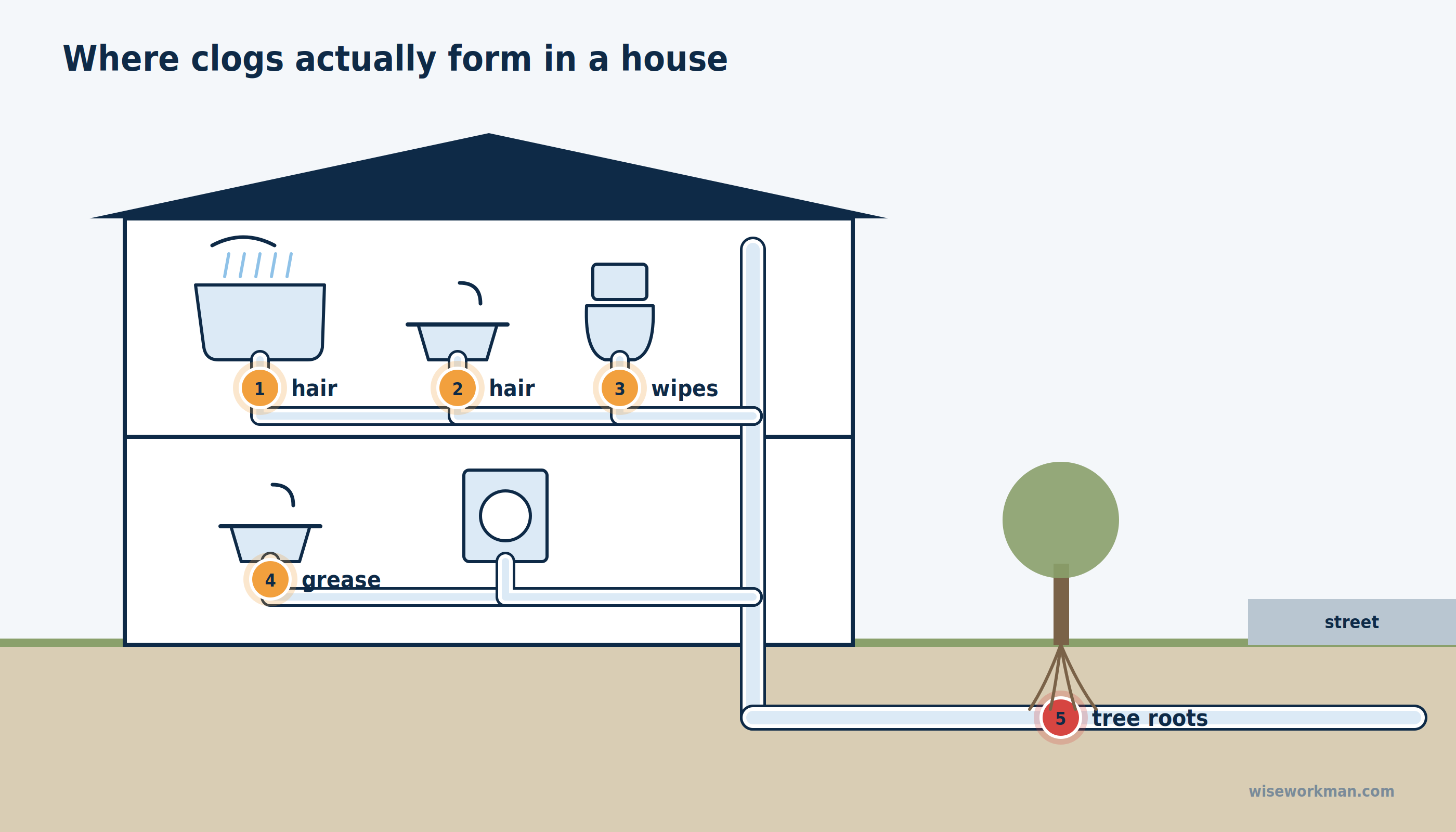
Drains fail for a small number of reasons: grease, hair, and soap build a coating inside the pipe until water cannot get through, tree roots crack into buried lines looking for moisture, and old pipes rust, sag, or break. Knowing which one you are dealing with tells you how big the repair is going to be.
| Cause | Where it shows up | How serious |
| Grease and food scraps | Kitchen sink | Low. Usually a cleaning job. |
| Hair and soap scum | Shower, tub, bathroom sink | Low. Often a DIY fix. |
| Wipes, paper towels, toys | Toilet, main line | Medium. Often needs a plumber. |
| Tree roots | Buried sewer or main line | High. Needs a camera and real repair. |
| Old, cracked, or sagging pipe | Anywhere underground or in walls | High. Repair or replacement. |
| Poor slope or bad install | New builds and remodels | Medium to high. Needs a rebuild of that run. |
One thing worth knowing: “flushable” wipes aren't really flushable because they don't break apart like toilet paper, which makes them a top cause of main line clogs in US homes.
Drain failures rarely happen at a convenient hour, which is exactly when people hire the first number they find. Wise Workman gives you a scored shortlist of drain repair companies near you now, so you've already made the decision when you need one.
DIY Drain Fixes vs. When to Call a Drain Repair Specialist
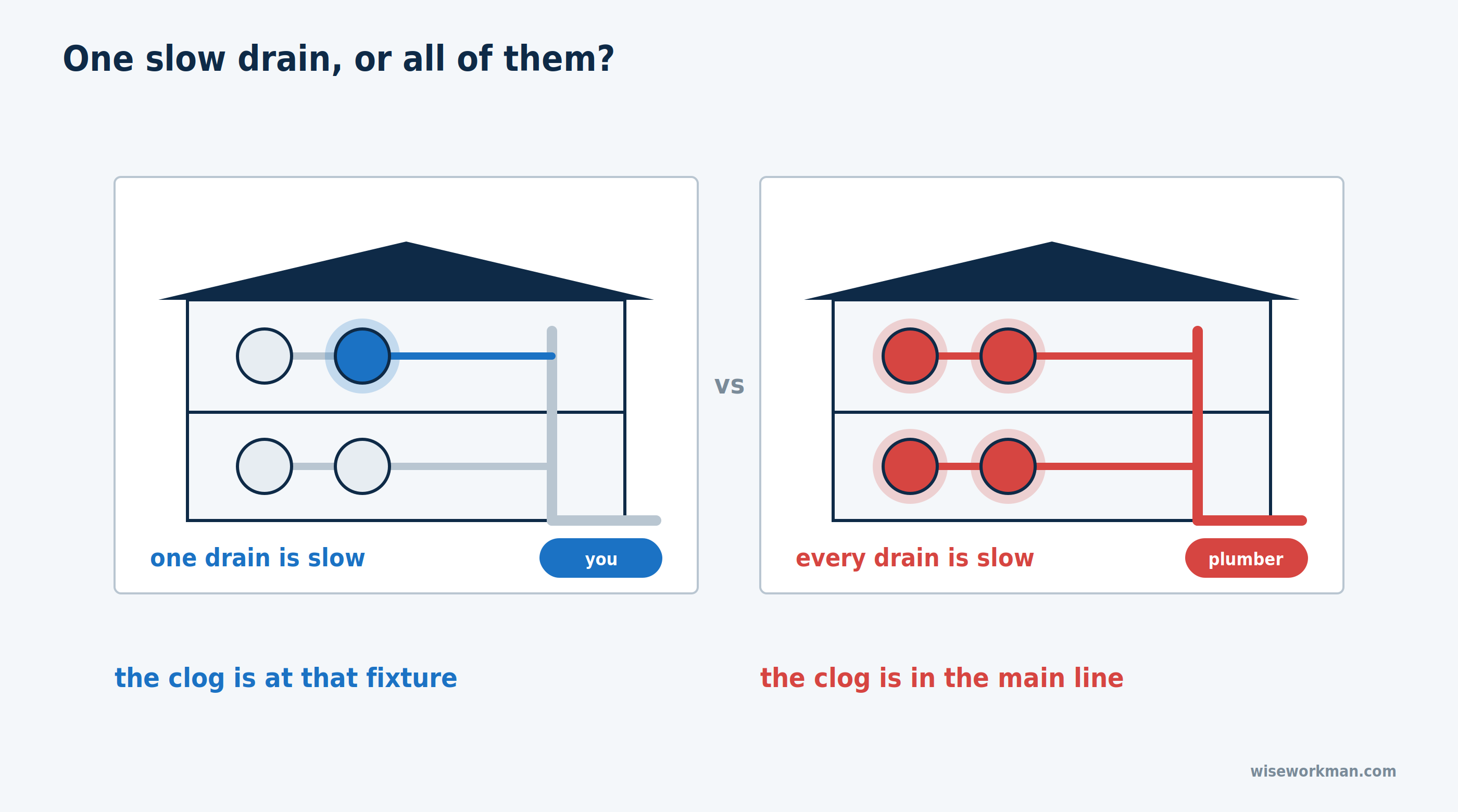
You can handle a clog that affects one fixture and clears with basic tools. Call a specialist when more than one drain is slow, when water comes back up, when the clog returns within a few weeks, or when the problem sits anywhere below the floor, because all four of those point to the main line or to a damaged pipe.
Drain Fixes You Can Safely Try Yourself
- Pull the stopper and clean it. In sinks and tubs, most clogs sit within a few inches of the opening.
- Use a plunger the right way. Cover the drain fully, seal the overflow hole with a wet rag, then push and pull steadily for 20 to 30 seconds.
- Try hot water and dish soap on kitchen drains. Soap breaks up grease. Run very hot tap water for two minutes after.
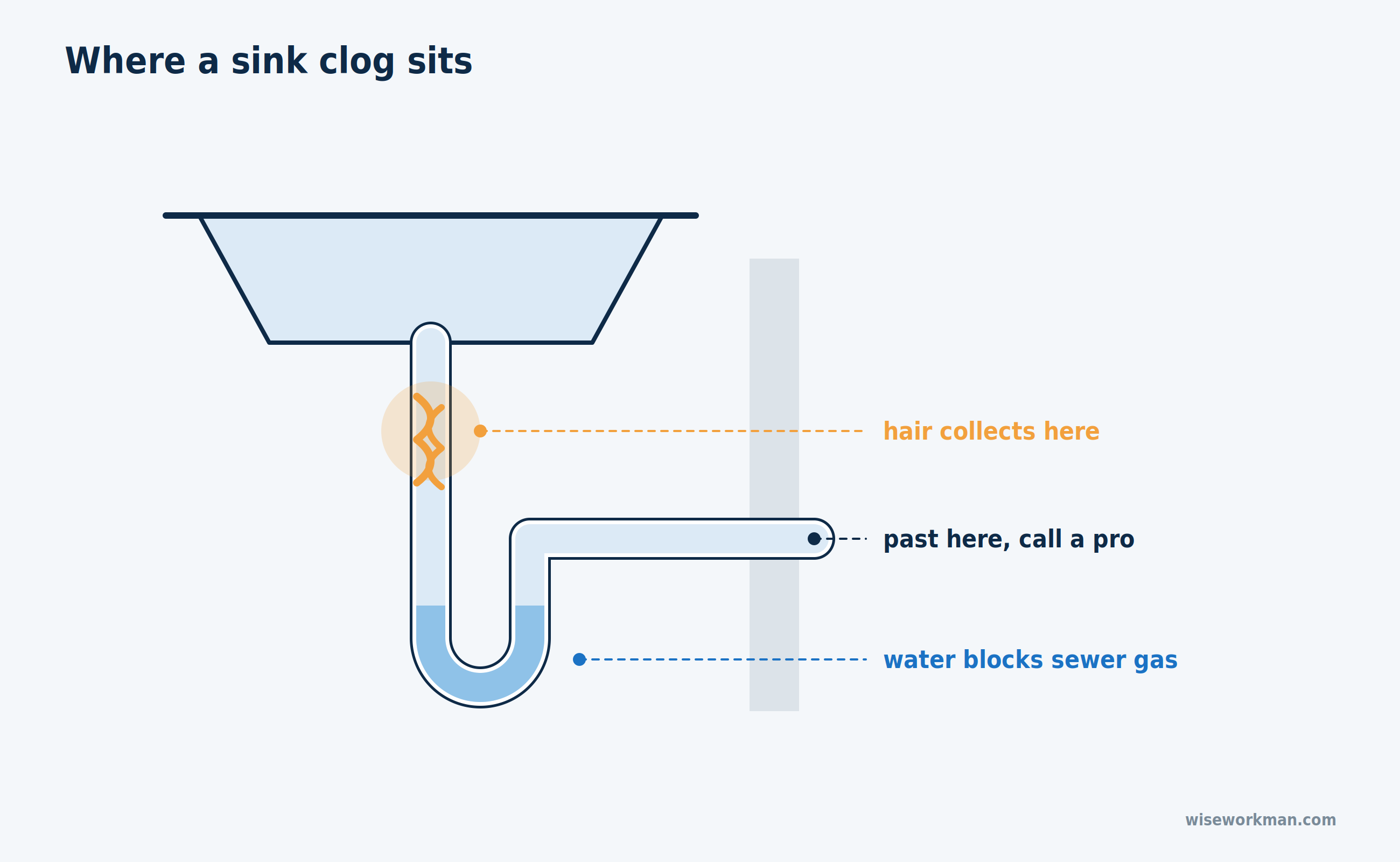
- Clean the P-trap. That is the U-shaped pipe under the sink. Put a bucket under it, loosen the two nuts by hand, clear the gunk, and put it back.
- Use a hand snake. A $20 drain snake reaches about 25 feet and clears most sink and tub clogs.
Skip the liquid drain cleaner, since it sits in the pipe giving off heat and can damage both older metal and plastic lines.
When You Should Call a Drain Repair Specialist
Call a plumber if you see any of these:
- More than one drain is slow or backing up
- Water rises in the tub or shower when you flush the toilet
- Gurgling sounds from another drain when you run water
- The same drain clogs again within a month
- A sewer smell inside the house
- Wet spots, soggy grass, or a sinkhole in the yard
These are not stubborn clogs: they are signs that the shared line under your home has a problem.
Drain Repair by Fixture: Kitchen, Bathroom, Shower and Tub
Each fixture clogs for its own reason, which is why the fix is different in each room. Kitchen drains fill with grease, bathroom sinks with toothpaste and soap, and showers and tubs with hair.
| Fixture | Most common cause | First thing to try | If that fails |
| Kitchen sink | Grease, food, coffee grounds | Hot water and dish soap | Snaking or hydro jetting |
| Bathroom sink | Hair, soap, toothpaste | Clean the pop-up stopper | Clear the P-trap |
| Shower or tub | Hair and soap scum | A barbed plastic drain tool | Snaking past the trap |
| Toilet | Wipes, paper, objects | A flange plunger | Toilet auger, or pull the toilet |
| Floor drain or main line | Roots, grease, collapse | Nothing; this one is not DIY | Camera inspection first |
Kitchen Sink Drains
Kitchen lines clog slowly because warm grease goes down as a liquid and then cools and sticks to the pipe wall until the opening narrows to nothing. Snaking punches a hole through that buildup, while hydro jetting uses high-pressure water to scrub the whole pipe, so it lasts a good deal longer. If you have a garbage disposal, check that first, since a jammed disposal looks exactly like a clogged drain.
Bathroom Sink Drains
This is the easiest one to fix yourself, because the pop-up stopper catches hair and soap right at the top. Unscrew the small nut behind the drain pipe, pull the stopper straight up, and clean it, which on its own solves the problem about half the time.
Shower and Tub Drains
Hair is nearly always the cause, so start with a barbed plastic drain tool, which costs a few dollars and pulls the clog out in seconds. If that does not work, the clog sits past the trap, and you need a snake or a shower and tub drain specialist.
Sewer and Main Line Drain Repair
The main line is the single big pipe carrying waste from your whole house out to the city sewer or septic tank, so when it blocks, every drain in the house is affected at once. This is the one category of drain repair where the fix is rarely simple.
Plumbers start with a camera inspection because sending a small camera down the line shows exactly what is wrong and how far away it is. Many companies credit that step toward the repair itself. From there, there are three common paths:
| Method | What happens | Best for |
| Snaking or rooter | A cutting tool clears roots and buildup | Clogs and light root growth |
| Hydro jetting | High-pressure water scrubs the pipe wall | Grease and heavy buildup |
| Trenchless pipe lining | A resin liner cures inside the old pipe | Cracked pipe, when you want no digging |
| Dig and replace | The yard is opened, and the pipe is swapped out | Collapsed or badly sagging pipe |
Trenchless work costs more per foot, but it leaves your driveway, patio, and landscaping intact, so when a plumber quotes a dig it is fair to ask whether a liner would do the job instead. If you want the numbers before you call, our sewer line repair estimate page breaks them down by method.
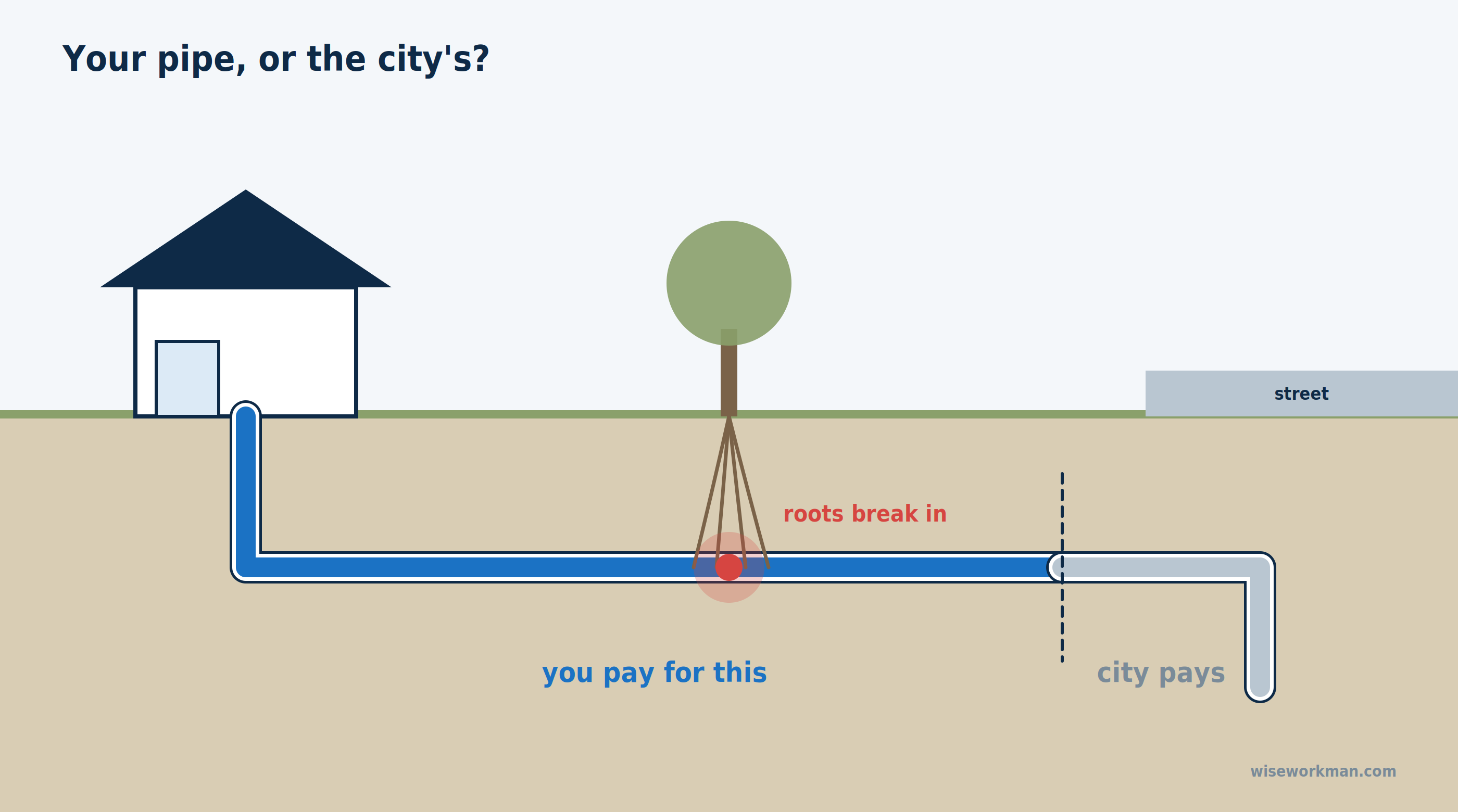
One more thing to check: in most cities, you own the sewer line from your house to the street connection and the city owns it from there, so if the blockage sits on the city side, the repair is not yours to pay for. Ask the plumber to show you where it falls on the camera footage.
Outdoor Drains: French, Storm, and Gutter Drains
Outdoor drains move rainwater away from your home instead of carrying waste, so when they fail, you get water in the basement, pooling in the yard, or cracks working their way into the foundation.
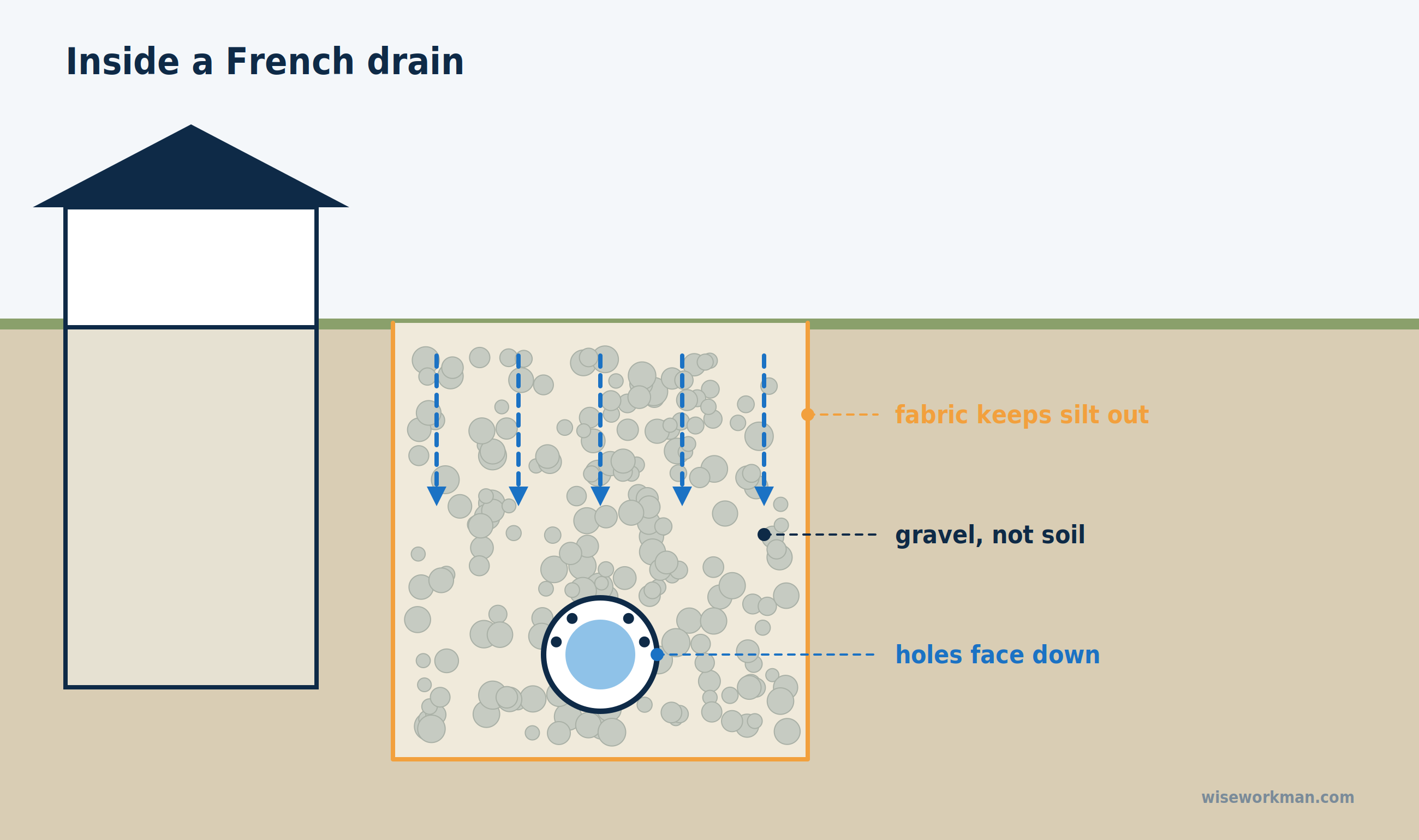
- French drains are gravel trenches with a perforated pipe inside, and they clog when silt and roots work their way in.
- Storm drains and catch basins fill with leaves and debris, which is usually just a clearing job unless the basin itself has cracked.
- Gutter downspout drains carry roof water underground, so when that buried line breaks, the water dumps straight down beside your foundation.
If your basement floods only during heavy rain, the problem is almost always outdoor drainage, not your plumbing.
What Does Drain Repair Cost?
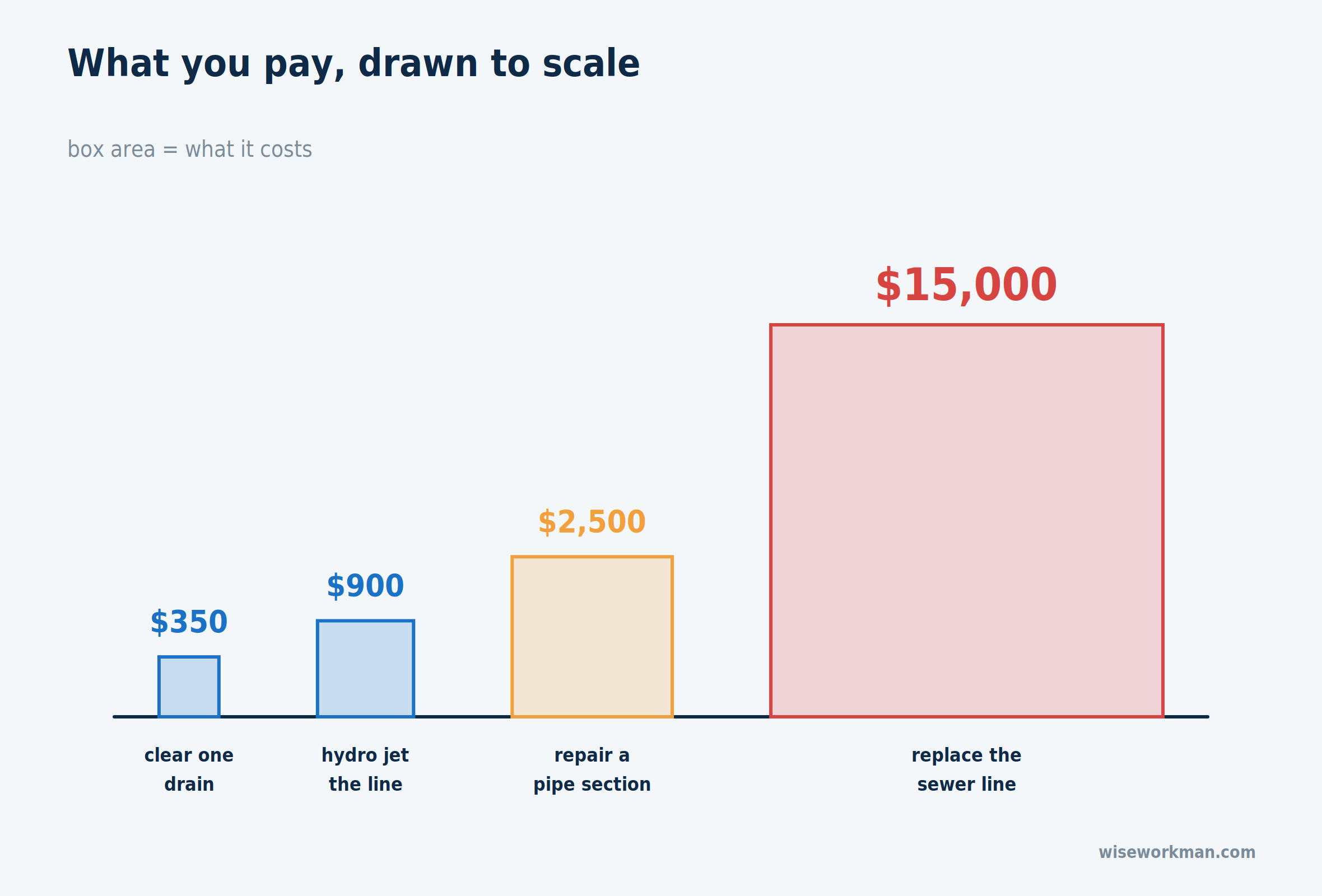
Most single fixture jobs land in the low hundreds, while main line work that involves digging or relining runs into the thousands, because the price follows how deep the pipe sits and how hard it is to reach. For current ranges broken out by job type, see our drain repair cost breakdown.
Emergency Drain Issues: What Counts and What to Do
A drain problem is an emergency when wastewater is entering your home, or when water is actively damaging the building. Everything else can usually wait until normal business hours, which saves you the after-hours premium.
Call now if you have:
- Sewage backing up into a tub, shower, or floor drain
- Every drain in the house backed up at once
- Water coming through a ceiling or wall
- A strong sewer gas smell indoors
- A yard sinkhole or a soggy patch that smells
It can wait until morning if you have:
- One slow drain
- A gurgling sound but normal drainage
- A slow tub with no backup
- A minor drip under a sink you can catch in a bucket
While you wait for help, stop using water everywhere in the house. Every flush and every load of laundry adds to a backup. Shut off the water supply if a pipe is leaking, and keep kids and pets away from standing sewage.
How to Find a Reliable Drain Repair Company Near You
A good drain repair company is licensed, insured, and willing to put the price in writing before starting. Ask what the diagnostic fee covers, whether it applies to the repair, and whether the quote is flat rate or hourly, then get a second opinion on any job that involves digging or replacing pipe.
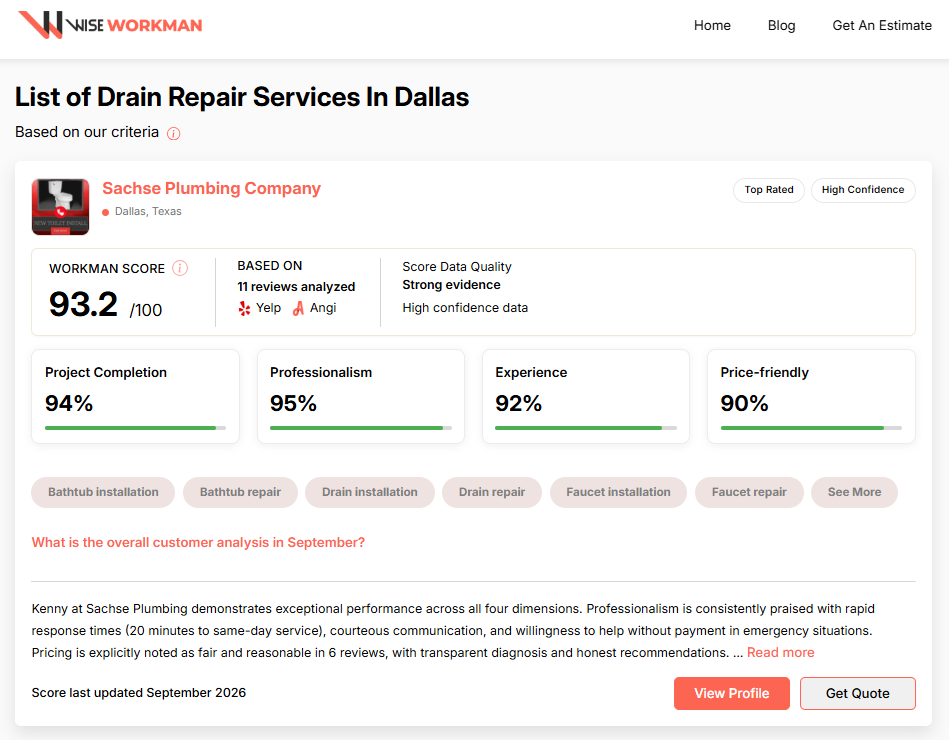
The fastest way to do that vetting is to start with a shortlist instead of a search page. Wise Workman is a plumber directory covering all 50 states, where every listing carries a WW Score built from license status, insurance, service history signals, and review authenticity, including checks that flag AI-generated and duplicated reviews. You get the same information a careful homeowner would spend an afternoon assembling, on one page, before you call anyone.
Here is a short checklist to run through:
- License and insurance. Ask for the license number and check it with your state board.
- Written estimate. Get the scope and the price in writing before work starts. Verbal numbers change.
- Camera proof. If a company says your line is collapsed, ask to see the footage. Any honest plumber will show you.
- Flat rate over hourly. Flat rate means you know the number up front.
- Recent reviews. Look at the last six months, not the all-time star rating.
- Warranty. Thirty days on a clearing and one year or more on a repair is normal.
- Two or three quotes on any job involving digging or pipe replacement.
Be careful with the rock-bottom coupon offer, because a cut-price drain cleaning special often turns into a large upsell once the technician is standing in your kitchen. A fair mid-range quote from a company with a real track record usually works out better in the end.
Frequently Asked Questions
How long does drain repair take?
Clearing one drain takes 30 to 90 minutes. Main line clearing takes one to three hours. Trenchless lining usually takes one day. A full sewer line replacement takes two to five days, plus time to restore the yard.
Are chemical drain cleaners safe to use?
Not really. They give off heat that can soften plastic pipe and eat at older metal pipe. They can also splash back and burn skin and eyes. If the clog does not clear, the chemicals sit in the pipe and make the plumber’s job more dangerous. A plunger or a hand snake is safer and works better.
Does homeowners insurance cover drain repair?
Usually not the pipe itself. Standard policies cover sudden water damage caused by a failure, but not the cost of fixing a worn-out or root-damaged line. Many companies sell a separate sewer or water line endorsement for a small yearly fee. Check your policy before you need it.
How can I keep my drains from clogging again?
Pour grease into a jar instead of the sink. Use hair catchers in showers and tubs. Flush only toilet paper. Run hot water for a minute after washing dishes. If you have big trees near your sewer line, have the line camera checked every two or three years.
Should I repair or replace my drain pipe?
Repair a single crack or one bad section. Replace when the camera shows multiple breaks, heavy root damage along the whole run, or a sagging section holding standing water. If the repair costs more than about half the replacement price, replacing is usually the better spend.